Picture grabbing coffee on the Rail Trail, then hopping a quick light-rail ride to Uptown. That is the everyday rhythm many people want in South End. If you are considering a townhome here, it is smart to weigh the perks against practical tradeoffs like parking, sound, and HOA rules. In this guide, you will learn what daily life feels like, how ownership and financing work, what fees to expect, and how to move forward with confidence. Let’s dive in.
South End lifestyle snapshot
South End is a dense, mixed-use neighborhood just south of Uptown. You will find adaptive-reuse buildings, microbreweries, restaurants, coffee shops, fitness studios, and boutique retail. The Rail Trail ties much of the area together and offers an easy path for walking and biking to daily destinations.
Most daily errands and recreation are within a short walk. Nightlife and weekend energy are part of the draw, and many residents plan their routines around walkable options rather than driving everywhere.
Walkability and transit access
South End is one of Charlotte’s most walkable neighborhoods. Many businesses sit within a 5 to 20 minute walk of central corridors, and Uptown is typically 1 to 2 miles away. Micromobility options like e-scooters and bike-share are common for last-mile trips.
The neighborhood’s transit backbone is the LYNX Blue Line light rail, which runs along South Boulevard and connects directly to Uptown and north toward UNC Charlotte. You can review current routes and stations on the official CATS transit page. The practical effect is simple. You can reduce car trips for workdays and nights out, which is a key reason buyers choose South End.
For recreation and daily movement, the Rail Trail is a standout. It links destinations across South End and provides a safe, active corridor that many residents use every day.
Townhome ownership basics
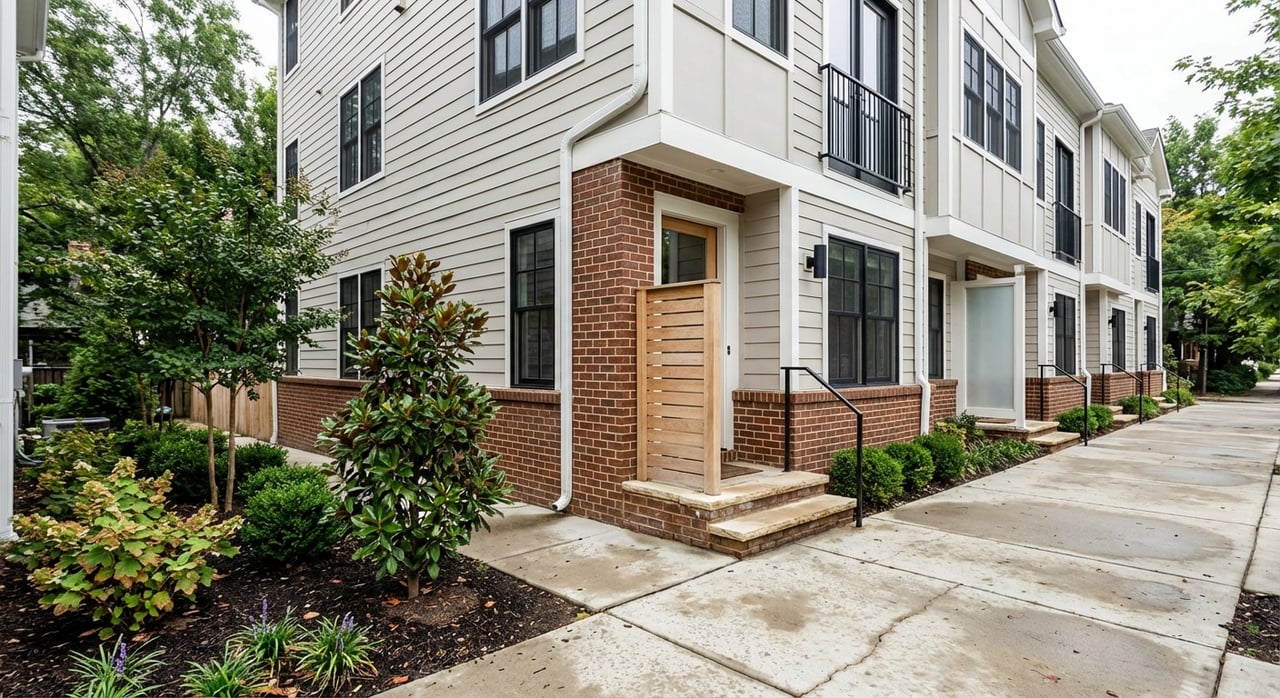
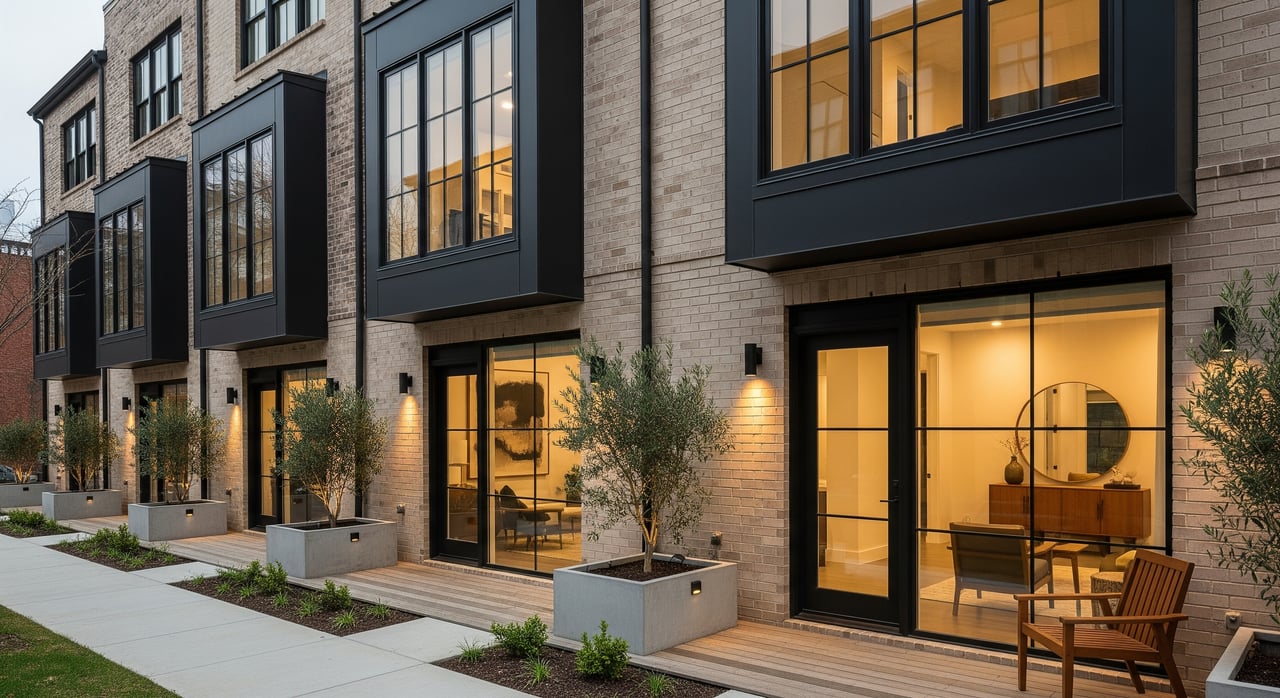
“Townhome” usually means an attached, multi-story home that shares at least one wall with neighbors and often includes a private, ground-level entry. Many South End townhomes are fee simple, which is more like owning a single-family home on a smaller lot. Others are legally structured as condominiums within an association. The exact model matters because it affects financing, insurance, and resale.
If the community is condo-style, a lender may need to review project-level documents and approvals. Fee-simple townhomes generally follow standard single-family underwriting. Since rules vary by development, confirm the legal structure with your agent and lender before you make an offer.
Financing at a glance
- Common loan types include conventional fixed-rate, FHA, and VA for eligible buyers. Jumbo or portfolio loans may apply for higher price points.
- Lenders include monthly HOA dues in your debt-to-income calculation. High dues or special assessments can affect approval.
- For condo-style projects, ask whether the community appears on appropriate agency approval lists if you plan to use conventional financing.
- Down payment requirements vary by loan program. Confirm current guidelines with your lender.
HOA costs and rules to expect
Townhome HOAs typically manage shared elements and services. In South End, responsibilities can include common-area maintenance, landscaping, trash, insurance for common elements, and amenities like courtyards or a pool. In some communities, the HOA also maintains exterior elements and roofing. In others, owners handle certain exterior items themselves. Read the CC&Rs to understand who pays for what.
As a working range, monthly dues often start around 100 to 200 dollars for minimal services and can run 300 to 600 dollars or more when exterior maintenance or amenities are included. Review recent financials, reserve studies, and meeting minutes for any history of special assessments.
Rules you will want to scan include architectural controls, exterior appearance, patio or fence guidelines, parking rules, quiet hours, pet policies, and leasing restrictions. Short-term rentals are often regulated by both HOAs and the City of Charlotte. Confirm both sets of rules before you plan to rent a unit.
Everyday tradeoffs to weigh
Parking
Most South End townhomes include a 1 or 2 car garage. Newer units more often have single-car garages, while some larger or corner units offer two. On-street parking is limited near retail corridors, and demand spikes at night and on weekends. If parking is a priority, target townhomes with private garages and ask sellers for the community parking map and guest policies. Some HOAs enforce towing for violations, so it pays to read the rules.
Sound and privacy
Shared walls and denser blocks mean sound can travel. Hardwood or tile, open layouts, and rooftop decks can increase noise. Location matters too, especially near nightlife corridors. To reduce noise transfer, look for end units, ask about wall assembly details, and review HOA minutes for any noise complaints. Area rugs, door sweeps, and weatherstripping are simple upgrades that can help.
Maintenance
Compared with a detached home, many townhomes shift some exterior work to the HOA. That can simplify your to-do list but increases ongoing dues and may limit your control over timing or materials. Clarify which items are covered by the HOA versus your individual policy, especially roofing, gutters, and exterior paint.
Resale potential
South End’s appeal is driven by walkability and transit-oriented living. Proximity to light-rail stations, the Rail Trail, and prime retail blocks often supports stronger demand. Units closest to nightlife may see higher interest and occasional turnover, along with potential noise tradeoffs. Interior updates like modern kitchens, bathrooms, and outdoor living spaces tend to add resale value in this market.
What townhomes cost in South End
Pricing shifts with market conditions, so treat these as approximate bands and check current MLS data for up-to-date numbers. Size, year built, finish level, garage count, and proximity to transit and retail all influence price.
- Entry-level or smaller units: mid-to-high 300s to low 500s.
- Mid-range: mid 500s to around 800k.
- Premium or new construction: roughly 800k to 1.2M and up.
These ranges reflect South End’s premium for walkability, direct LYNX access, and concentrated amenities compared with broader Charlotte.
What to ask on a showing
Use this quick checklist to protect your budget and your peace of mind:
- Ownership model: Is the townhome fee simple or part of a condominium association? Confirm with the recorded documents.
- Financing: Will the project need lender or agency approval for your loan type? Ask your lender early.
- HOA documents: Request CC&Rs, bylaws, rules, recent financials, reserve study, master insurance, and meeting minutes. Scan for special assessments.
- Parking plan: Confirm assigned spaces, guest parking, and towing policies. Ask for a community parking map and recent enforcement history.
- Noise and water: Ask for seller disclosures about noise complaints, water intrusion, roof or structural work, and any soundproofing upgrades.
- Insurance: Clarify what the HOA master policy covers vs. your HO6 or HO3 responsibilities.
- Leasing rules: Review any caps, minimum lease terms, or short-term rental restrictions.
- Schools: Public school assignments vary block by block. Use Charlotte-Mecklenburg Schools boundary tools to check a specific address.
Planning your next steps
A smart approach pairs a neighborhood walk with document review and a lending conversation. Walk the Rail Trail and key corridors at different times of day to test noise, parking, and commute options. Review HOA financials and rules before you make an offer. If transit access is a priority, confirm station locations and schedules on the CATS website. For neighborhood context and upcoming changes, browse the City’s Planning, Design & Development resources and the South End business district’s Rail Trail overview.
When you are ready to compare active listings, talk through financing, and schedule tours, reach out to Lochmoor Realty. You will get direct, local guidance tailored to how you want to live in South End. Schedule a free consultation and take the next step with confidence.
FAQs
What is the LYNX Blue Line and how does it serve South End?
- The LYNX Blue Line is Charlotte’s light rail that runs along South Boulevard through South End and into Uptown, reducing car trips for commuting and daily errands; you can review routes and stations on the CATS site.
How do HOAs affect mortgages for South End townhomes?
- Lenders include monthly HOA dues in your debt-to-income ratio, and condo-style projects may require project approval, so share HOA documents with your lender early to avoid delays.
What do South End townhomes typically cost today?
- As a general guide, expect mid-to-high 300s to low 500s for entry units, mid 500s to around 800k for mid-range, and 800k to 1.2M-plus for premium options, with exact pricing set by size, age, finishes, and location.
Are short-term rentals allowed in South End townhome communities?
- Many HOAs and the City of Charlotte regulate or restrict short-term rentals, so confirm both the HOA rules and local requirements before planning any rentals.
How can I confirm school assignments for a South End address?
- School assignments vary block by block; use the Charlotte-Mecklenburg Schools boundary tools and verify the exact address directly with the district.
Is on-street parking reliable for guests in South End?
- On-street parking near retail corridors is limited and demand increases at night and on weekends, so prioritize units with garages and review guest parking and towing policies with the HOA.